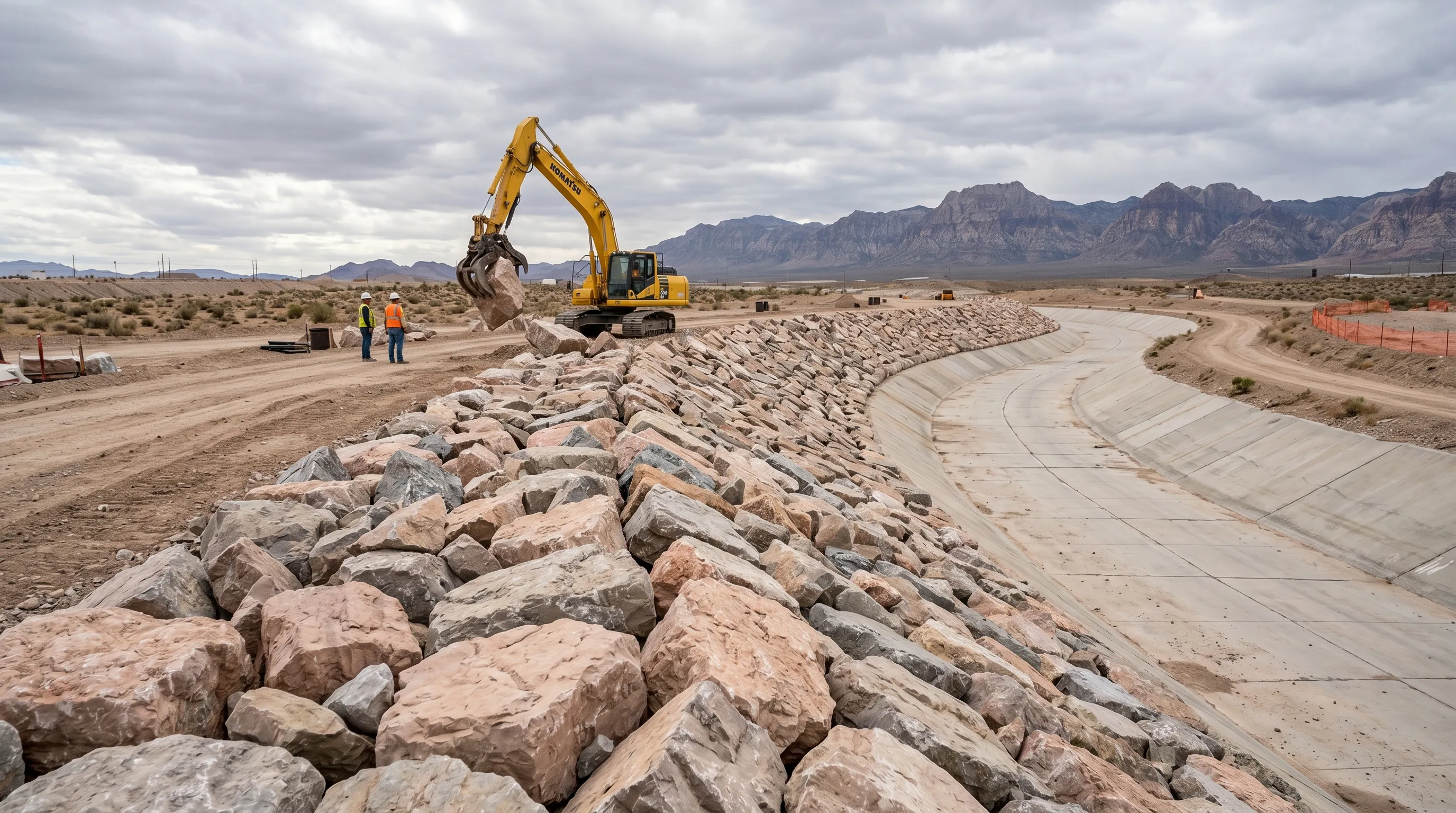
rip-rap erosion control armor on graded slope along flood control channel with spring mountains las vegas

Water Moves. Stone Stays.

Engineered rip-rap for erosion control, slope armoring, and channel work. Drain rock for french drains, foundation perimeter drainage, and infiltration. Two material families, one call, sized to the spec your engineer actually wrote.
Two Materials, Two Jobs, One Supplier

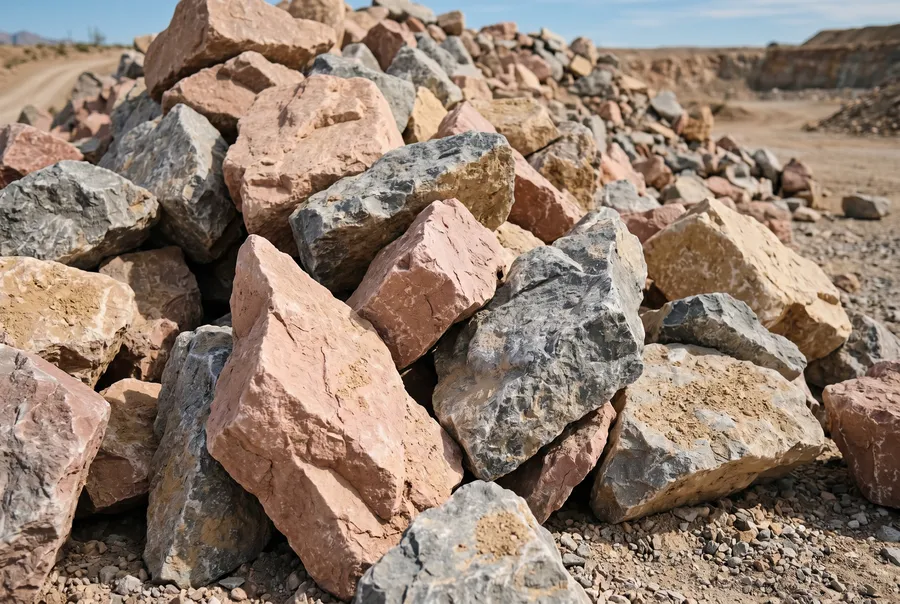
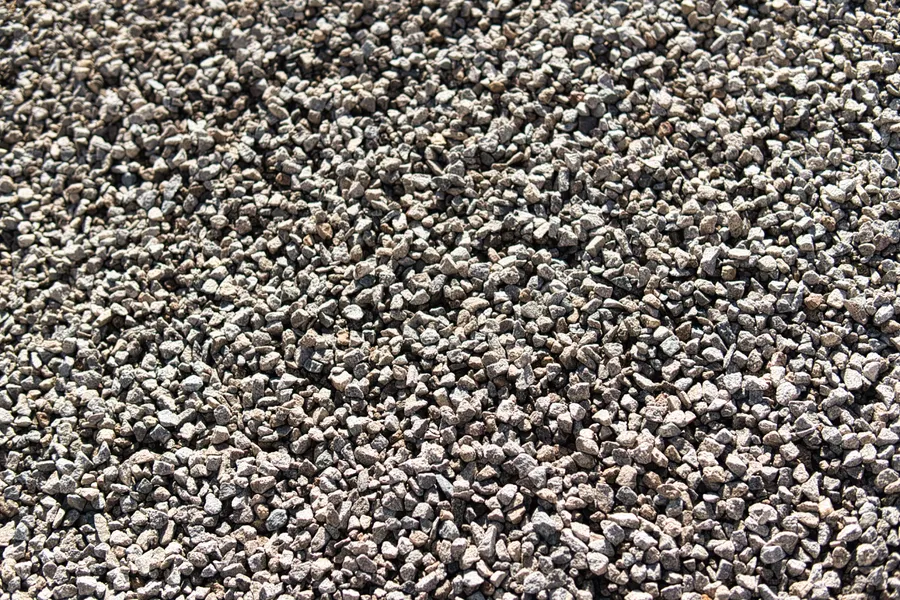
Rip-rap is large angular stone placed to resist erosion in flood channels, bridge fills, graded slopes, and culvert outfalls. The job is to stay put while water moves across it at speed. Drain rock is smaller, clean-washed aggregate placed to let water move through it. French drains, foundation perimeters, infiltration basins, leach fields. The job of drain rock is to be the path water takes, not the barrier.

Putting the wrong material in the wrong place is the most common failure on drainage and erosion work. Drain rock under real runoff velocity washes away. Rip-rap in a french drain clogs and holds water against the thing you were trying to protect. We supply both, we deliver them on the same job, and we will tell you which one belongs where.

Decide by What the Water Is Doing

Two product families on one page because they show up on the same jobs. Pick the side that matches the problem.

large angular rip-rap stones stockpile closeup las vegas erosion control
Rip-Rap

When the Problem Is Erosion

Armor against flowing water, not a drainage aggregate.

  • Size: 4 to 18 inches, sized by D50
  • Job: Hold slopes, channels, and culverts against water velocity
  • Typical grades: 4-8" (6" D50), 6-18" (12" D50), 12" standard D50
  • Placement: Engineered per plan, minimum 2x D50 thickness
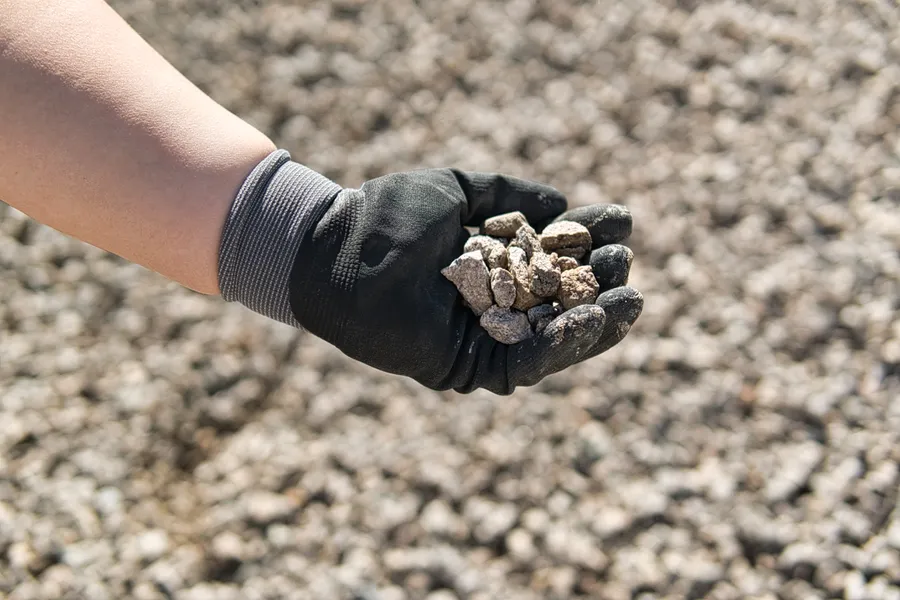
3/4 inch drain rock closeup las vegas french drain aggregate
Drain Rock

When the Problem Is Standing Water

Drainage aggregate, not an armor layer.

  • Size: 3/4 inch standard, 1.5 inch for heavier flow
  • Job: Move water through a clean, open-void layer
  • Typical grades: 3/4" clean-washed, 1.5" clean
  • Placement: Trench backfill over filter fabric and perforated pipe

Three Standard D50 Options

Three gradations that cover most Clark County, NDOT, and private civil work. Custom D50 available when the engineer calls for it.

Rip-Rap

Rip-Rap 6 to 18" (12" D50)

Heavy-duty erosion armor

Best for
High-velocity channels, bridge approach fills, highway embankment protection, flood control slopes
D50
12" median particle

Our largest standard grade, sized for impact resistance on the jobs where water velocity actually matters.

Rip-Rap

Rip-Rap 4 to 8" (6" D50)

Mid-range erosion control

Best for
Moderate-velocity channels, commercial slope stabilization, residential ravine armoring, landscaped slopes
D50
6" median particle

The most-spec'd residential and commercial grade. Easier to place than the big stuff, and it still reads as engineered armor rather than landscape rock.

Rip-Rap

Rip-Rap 12" Standard

Tight D50 gradation

Best for
Engineered slope protection with a specific D50 requirement, channel work, flood control basins
D50
12" median, tighter spread

When the engineer specs a D50 and a gradation curve, this is the grade that hits the paperwork.

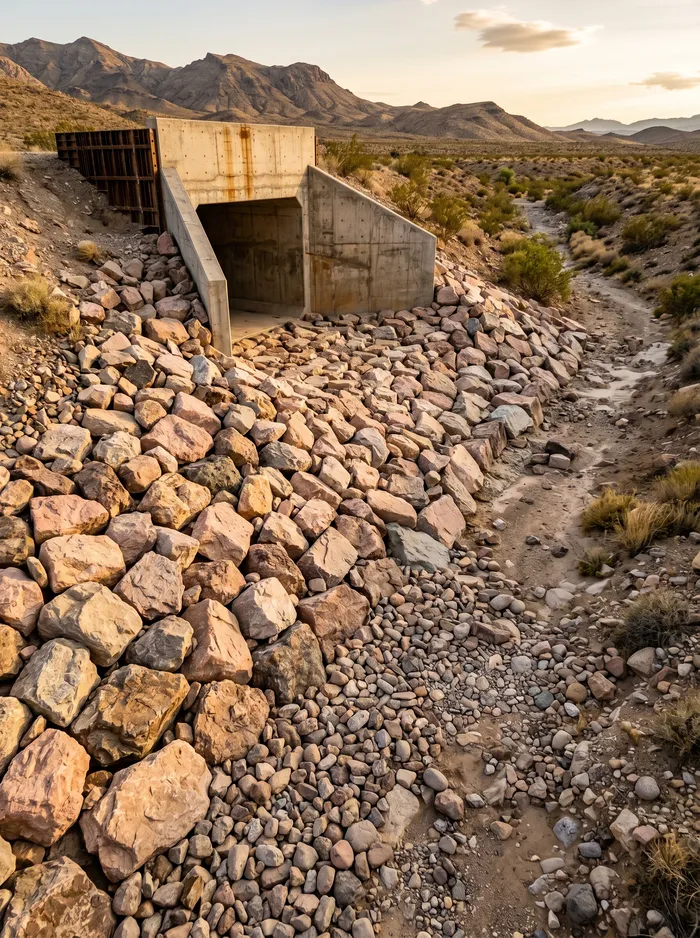
rip-rap erosion armor at concrete box culvert outfall las vegas desert

Where Pipe Meets Dirt, Rip-Rap Meets Flow

Culvert outfalls are where erosion shows up first. Water exits a concrete pipe carrying the energy it picked up inside, hits the slope, and starts cutting. An engineered rip-rap apron absorbs that energy before it can undermine the pipe or the fill behind it.

The apron is sized by velocity at the pipe outlet, usually stepping from a larger D50 at the pipe face down to smaller transition rock at the edges of the scour pad. We supply the full gradation in one delivery when the plan calls for it, so the crew does not lose a half day chasing transition stone.

Drain Rock for Vegas Drainage and Sub-Base Applications

3/4 drain rock for standard drainage, 1.5 inch drain rock for heavier applications. Both clean-washed and screened, loaded from our yard for french drains, foundation perimeters, and under-slab drainage across the Valley.

Drain Rock

3/4" Drain Rock

Standard drainage aggregate

Best for
Foundation perimeter drains, french drains, planter bed drainage, landscape dry wells, under-slab drainage
Flow
High, clean-washed, stable under normal load

Tan and buff colored, clean-screened, ready to drop in a trench and backfill over. Our default drain rock for residential and light-commercial drainage work.

Drain Rock

1.5" Drain Rock

Heavier drainage layer

Best for
Leach fields, high-volume infiltration basins, deeper trenches with sediment load, rip-rap transition layer
Flow
Very high, larger voids, clog-resistant

The step up when 3/4" drain rock would choke under sediment, or when the engineer wants more void space for stormwater carry.

Pro tip: A french drain is only as good as what it sits on. Filter fabric under the rock, perforated pipe pitched at 1 percent minimum, then 3/4 drain rock as the backfill. Skip the fabric and the drain chokes in a few seasons.

Which Grade for Which Job

The quick reference. The engineer's plan still wins when the two disagree.

ScenarioPickWhy
Residential slope or ravine stabilization Rip-Rap 4 to 8" Mid-range armor handles normal runoff and is reasonable to place by hand or small equipment.
Commercial property slope reinforcement Rip-Rap 4 to 8" or 6" D50 Standard commercial grade. Reads as engineered without needing the big 18" blocks.
Flood control channel or bridge fill Rip-Rap 12" D50 High velocity needs heavier stone, and both the paperwork and the inspector want the 12" D50.
Highway embankment per NDOT spec Engineered D50 per plan NDOT calls the grade on the plan, and we pull from the closest quarry that ships to that spec.
Foundation perimeter drain 3/4 drain rock Standard residential drainage aggregate that moves water away from the footing before it becomes a problem.
Leach field or infiltration basin 1.5" Drain Rock Larger voids carry more water before sediment builds up, which means less maintenance downstream.
Under-slab capillary break 3/4" Drain Rock Clean, open-graded drain rock with no fines to wick moisture into the slab.

Where Rip-Rap & Drain Rock Actually Go

Flood Control & Channels

Clark County flood control basins, concrete-lined channels transitioning to rip-rap aprons, and detention pond spillways. When the plan calls for D50 sizing, we match the gradation and ship the test data that travels with the load.

Highway & Bridge Work

NDOT embankment protection, bridge approach fills, culvert inlets and outfalls, and abutment armoring. We supply rip-rap that meets state spec directly to county and municipal contractors, loaded from the closest of our 42 sourced quarries.

Residential Slope Stabilization

Properties backed against desert washes or graded slopes in the Valley. Rip-rap locks the slope in place before the first monsoon-season storm finds a weakness. Mid-range 4 to 8" is usually the right call for homes and HOAs.

Foundation & Under-Slab Drainage

3/4 drain rock in a trench with filter fabric and a perforated pipe moves water away from the foundation before it pushes into the slab. Standard residential detail, also used in commercial perimeter drains and under-slab capillary breaks.

Landscape Drainage & Dry Wells

Planter-bed drainage, downspout infiltration pits, and dry streambeds with structural intent. Drainage rock hides under the finish material and keeps the water moving when the monsoon arrives.

Leach Fields & Infiltration

Septic drain fields and engineered stormwater infiltration basins where sediment load would clog smaller aggregate. 1.5" drain rock buys years of service before the voids pack down.

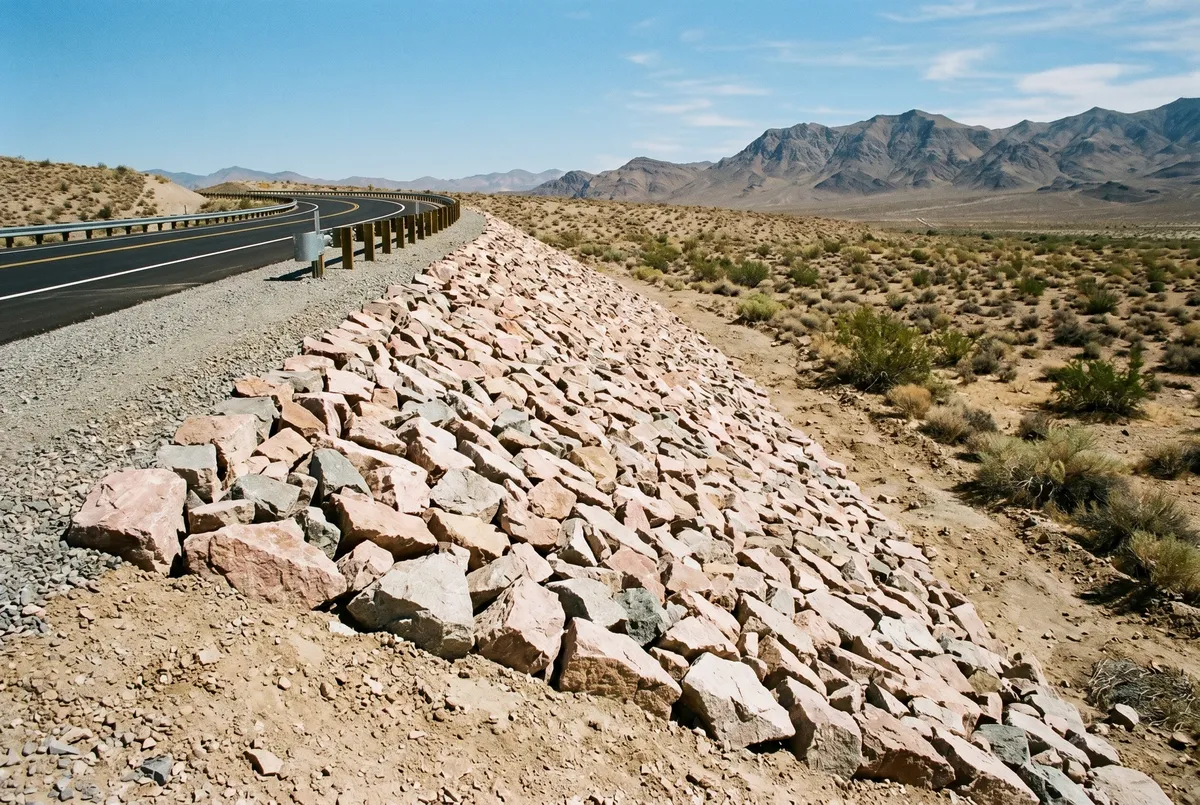
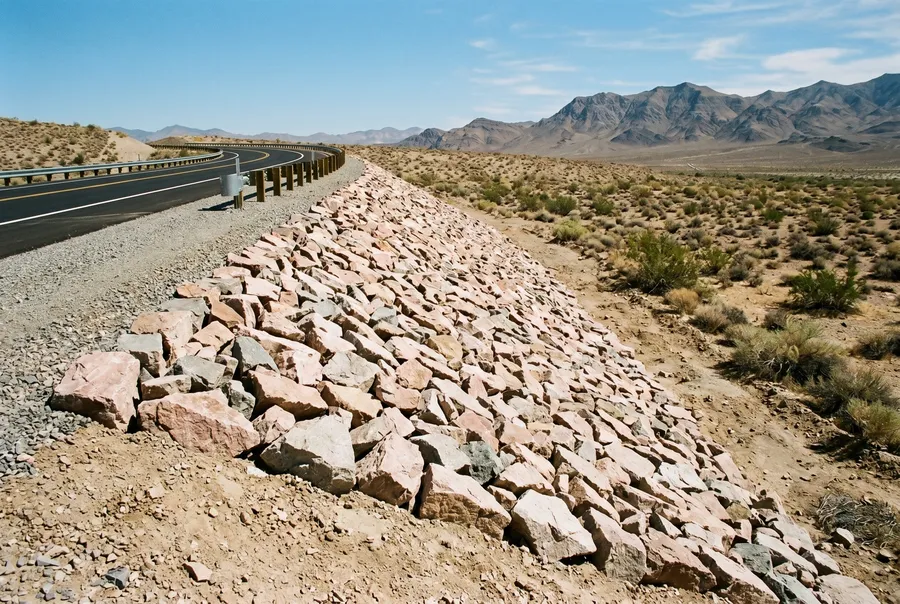
rip-rap erosion protection on highway embankment slope nevada desert
Highway embankment · rip-rap placed on a 3:1 cut slope, stone transitioning to decomposed granite at the toe.

Rip-Rap or Drain Rock? Read the Problem First.

If the Problem Is…PickWhy
Water moving fast and you need to stop erosion Rip-Rap Sized for velocity so the stones stay put while water keeps going.
Water collecting and you need to move it out Drain Rock Open-graded, washed, high flow. Drain rock is the path water takes, not the barrier.
Slope on a commercial or residential property Rip-Rap 4 to 8" Reads as engineered armor, reasonable to place, and a common county spec.
Foundation perimeter or french drain 3/4 drain rock Standard drainage gradation that bridges over perforated pipe slots without clogging.
Engineered D50 specified on the plan Rip-Rap 12" D50 Tight-graded and documented, so it passes the submittal.
Leach field or infiltration basin 1.5" Drain Rock Larger voids mean less sediment packing and longer service life.

What the Material Actually Looks Like

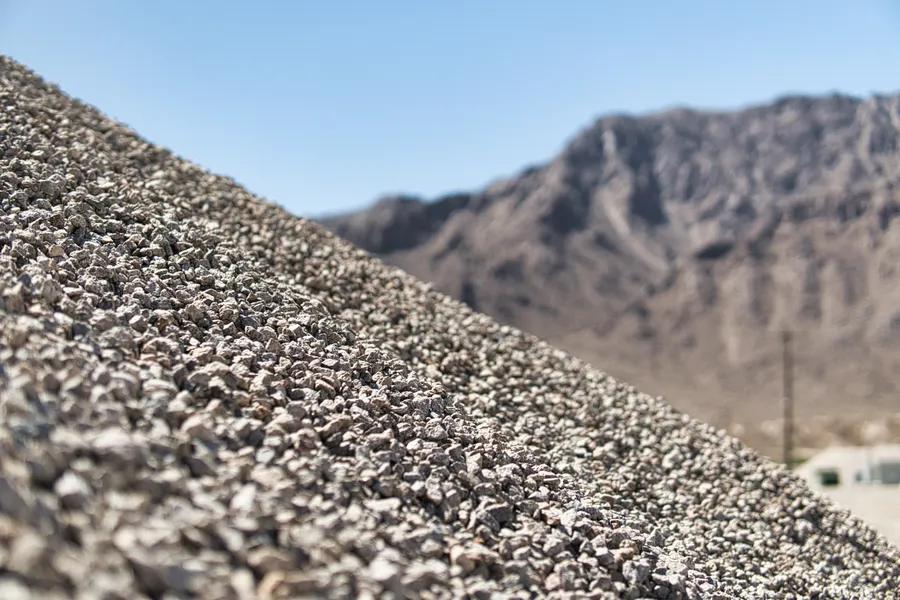
Real drain rock from our yard, real rip-rap from sourced quarries. Color varies pinkish-tan to grey-buff depending on source.

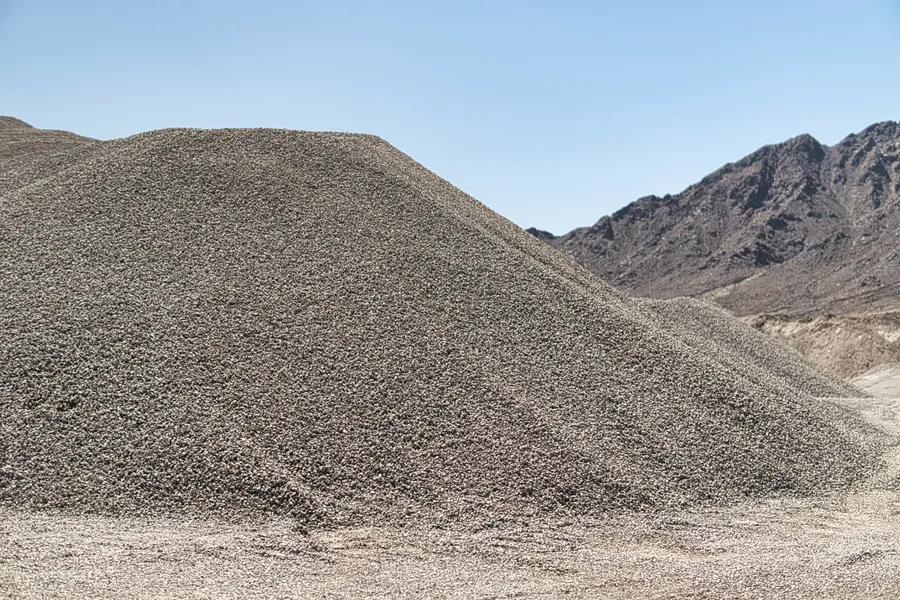
3/4 inch drain rock pile at impact sand and gravel las vegas yard
3/4" drain rock · clean-washed drainage aggregate
drain rock stockpile closeup las vegas
3/4" drain rock · stockpile texture
drain rock aggregate batch las vegas drainage
3/4" drain rock · open void structure
drain rock pile detail las vegas french drain backfill
3/4" drain rock · tan and buff color range
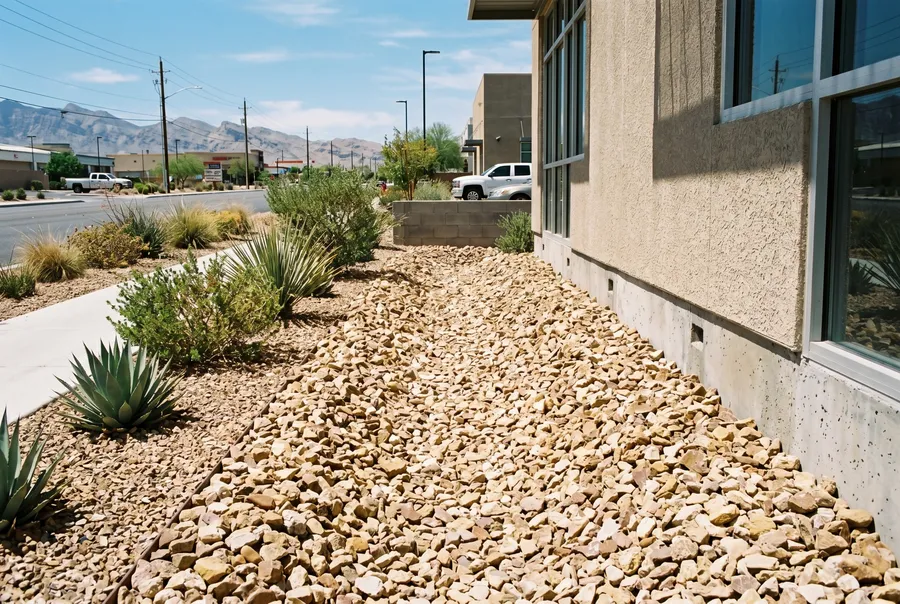
drain rock drainage swale beside commercial building las vegas
Drain rock · swale beside commercial foundation
rip-rap on graded highway embankment slope nevada
Rip-rap · engineered slope armor

Rip-Rap & Drain Rock Plus the Rest of the Stack

Frequently Asked Questions

Rip-rap is large angular stone, usually 6 to 18 inches, sized by D50 (median particle size) and placed to armor slopes, channels, and culverts against erosion. Drain rock is smaller coarse aggregate, typically 3/4 inch or 1.5 inch, used to move water through a drainage layer such as a french drain, foundation perimeter drain, or infiltration basin. Rip-rap holds material in place under water velocity, while drain rock lets water move through a clean void space. Different jobs, different material.
D50 is the median particle size in a rip-rap gradation. If the plan calls for "Rip-Rap with 12 inch D50," the middle 50 percent of stones in the mix should be around 12 inches. Engineers use D50 because it controls the hydraulic performance of the armor layer. When we ship to a D50 spec, test data on the gradation is available on request.
Rough estimate: 150 to 200 tons per 1,000 square feet of slope, depending on thickness (usually 2x the D50) and the slope angle. The real answer comes from the civil engineer. Call (702) 597-1010 with your slope dimensions, D50, and design thickness, and we will run the math and call you back with a quote.
Yes. We supply rip-rap in standard D50 grades and custom gradations for NDOT, Clark County, Henderson, and municipal projects. Test data travels with the load when submittal paperwork is part of the job. Call with the project spec and we will confirm which of our 42 sourced quarries supplies to that gradation.
No. Drain rock is too small for erosion control on anything but the mildest flow. Under real runoff velocity, drain rock washes away and the slope fails. Use rip-rap for armor and drain rock for drainage. Trying to combine the two jobs into one cheaper material usually ends with a rebuild.
20 to 50 years, and often longer. Properly sized and properly placed rip-rap is close to permanent. The stones themselves do not degrade, and maintenance is usually just topping off where a monsoon storm pulled a few blocks out of position.
Default to 3/4 drain rock. It is the ASTM standard gradation for foundation perimeter drains and french drains. Step up to 1.5 inch drain rock for leach fields, high-sediment applications, or when the engineer specifies a more open gradation.
Yes. Drain rock is commonly used as a hidden drainage layer beneath decorative rock, pavers, or other finish material. It keeps water moving so the finish surface does not sit in a puddle. In that case drain rock is construction material rather than the decorative layer, so it does not qualify for SNWA rebates on its own.
Standard delivery is 2 to 5 business days. For large civil jobs we load from whichever sourced quarry is closest and best matched to the spec. Multi-truck deliveries for 500-plus ton projects get scheduled and sequenced so the excavator never stops placing. Call with the tonnage and the window, and we will call you back with a quote and a realistic timeline.

Rip-Rap or Drain Rock, Sized and Scheduled?

Tell us the D50 or the trench size, the tonnage, and the site. We will call you with a quote, delivery windows, the nearest sourced quarry, and any submittal paperwork your engineer wants to see.