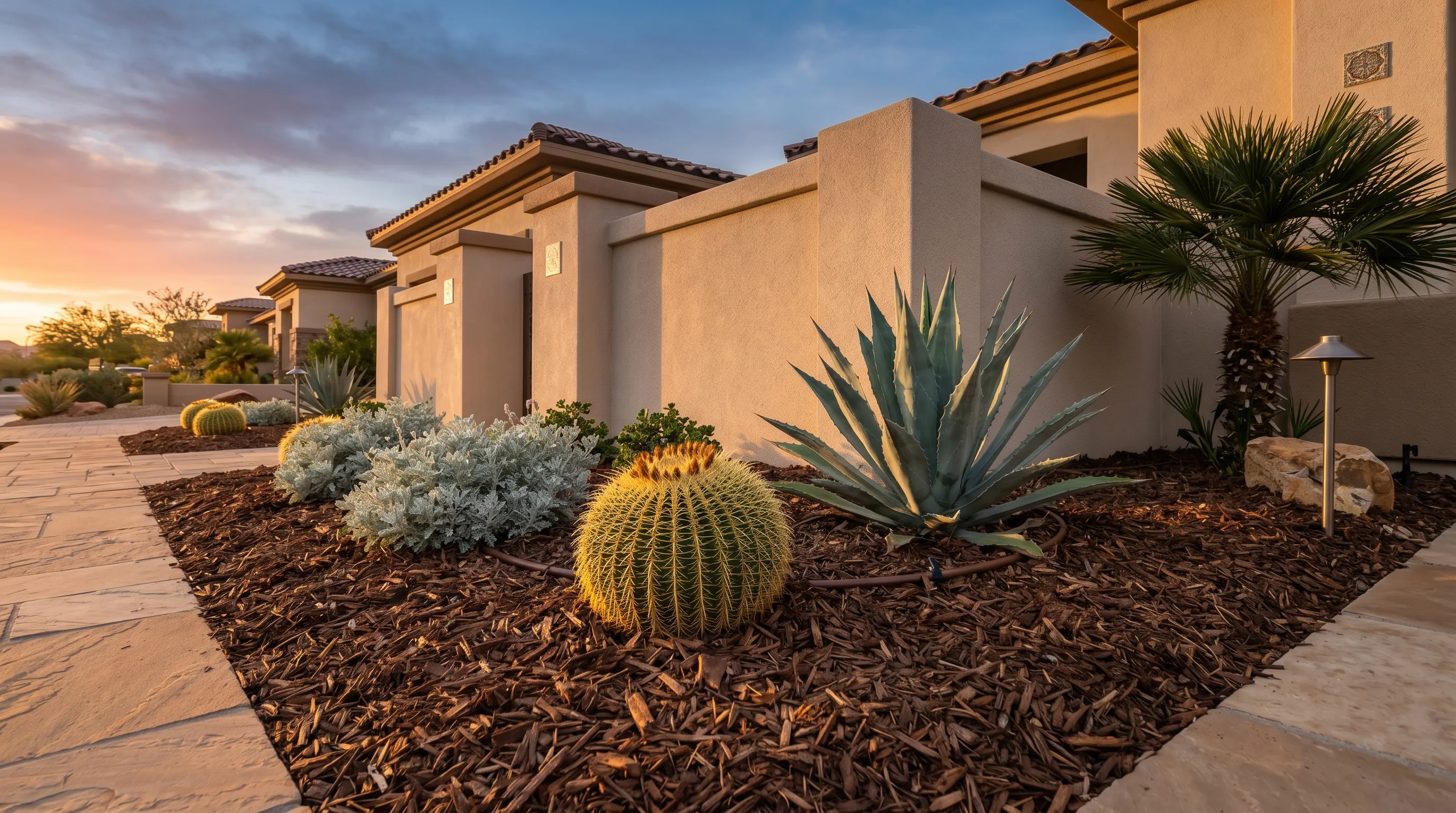
Organic mulch goes where plants live. Decomposed granite, pea gravel, and decorative rock go where the surface has to last. We deliver all of it valley-wide and help you choose the right option for each zone of your yard.
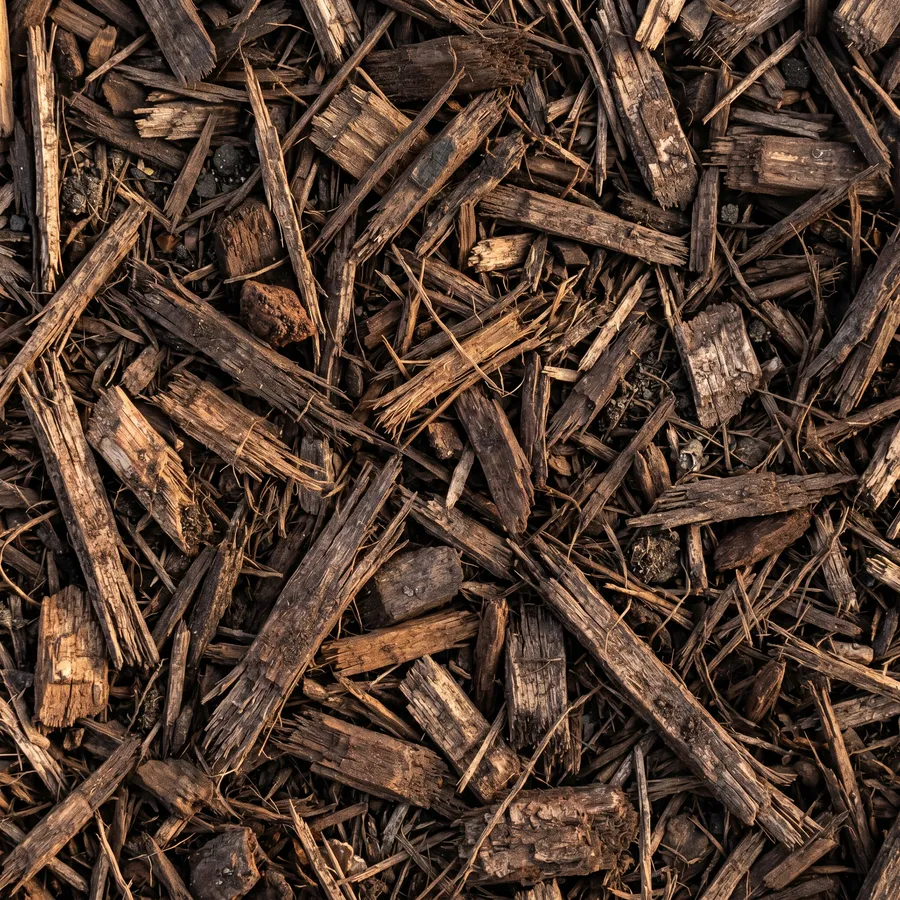
Most customers ask whether they should use mulch or rock, and the answer is usually both. Mulch is organic: shredded wood and bark that breaks down, retains moisture, and builds soil. Rock is inorganic: permanent, low-maintenance, and SNWA-rebate-eligible. Good Vegas yards put mulch in the planted zones and rock in the open sun.
This page walks through the options ISG delivers for every zone. Organic wood mulch covers tree rings and planted beds. Decomposed granite and pea gravel handle pathways and bases. Decorative rock serves as primary ground cover. We'll help you spec each zone, calculate tonnage, and get it to your driveway in 2-5 business days.
What each material actually does, what it costs you to keep, and where it belongs.
The only organic option on this list. It builds soil over time and retains moisture. Plan on adding 1-2 inches a year as it breaks down.
Fine granite that compacts firm underfoot. It has a desert-native look and is SNWA-approved. For most rebate projects, DG is the default starting point.
ExploreSmooth 3/8-inch rounded stones that are comfortable to walk on. It drains fast and stays cleaner than DG. For high-traffic zones, pea gravel is more stable.
ExploreBrown, red, rose, and silver frost options that give you permanent, low-maintenance ground cover. It has the highest upfront cost and the lowest lifetime cost. Colors vary by design intent.
Explore
Most desert yards skip mulch because it "doesn't last out here." That's true if you're using it as full-coverage ground cover in a south-facing front yard. It is not true for the zones where mulch does its best work: tree rings, shaded beds, vegetable gardens, and new plantings in their first summer.
Natural shredded hardwood breaks down slowly and adds soil structure to Vegas clay. It also drops evaporation loss dramatically in the hottest weeks of the year. The tradeoff is the annual top-up of about an inch a year, plus the fact that it isn't SNWA-rebate-eligible. Those tradeoffs are fine when you put mulch in the right zone.
A 2-3 inch mulch blanket cuts evaporation dramatically. In Vegas heat that can mean watering 30-40% less during July and August.
Bare ground bakes to 140°F+ in July. Under mulch, the soil stays 15-25°F cooler. Roots stop stressing and plants actually grow.
Thick mulch blocks light to weed seeds. What does sprout is easy to pull because it never got rooted in deep.
As mulch breaks down, it feeds soil microbes and slowly transforms compacted Vegas clay into something that actually holds nutrients.
Fresh mulch is the fastest way to make a yard read "done." One afternoon of spreading can reset the front-of-house aesthetic.
Rare winter cold snaps can burn young plants. Mulch around the base adds insulation the same way it blocks summer heat.
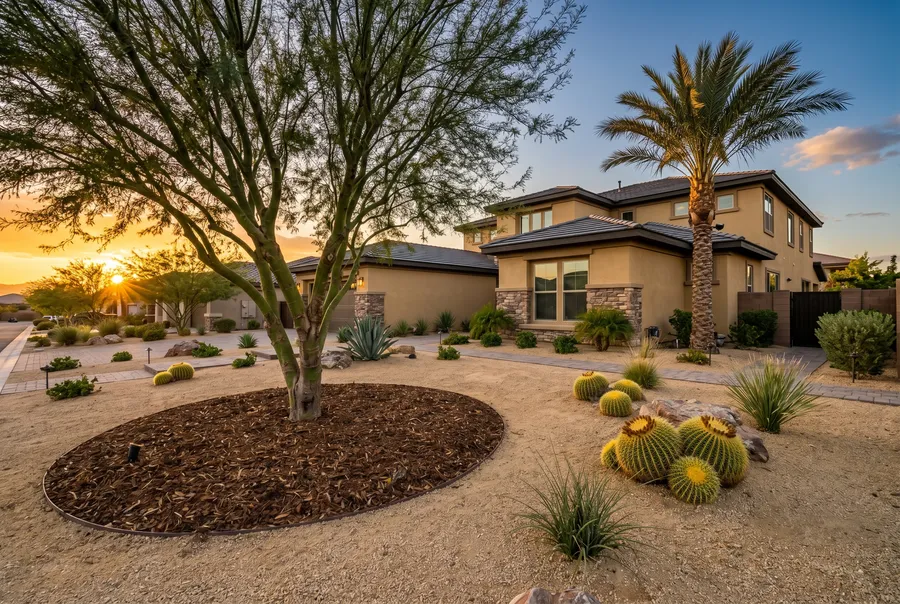
This is the most common use. A 4-6 ft mulch ring around a tree like palo verde, desert willow, or mesquite cuts water use. It also protects the trunk from string-trimmer damage.
Under a patio cover or on the north side of a house, mulch holds up for years. It also reads better than rock in shaded zones.
This is the one place you want organic ground cover. Mulch around tomatoes, peppers, and herbs keeps roots cool and feeds the soil.
Mulch is the finish layer in a penstemon or salvia bed. Pair it with drip and you have a low-maintenance desert cottage look.
Even in a rock-dominant yard, a temporary 2-inch mulch layer around new shrubs dramatically improves first-year survival.
South- and west-facing open yards. Rock doesn't decompose under direct sun the way mulch does, so there's no replenishment cycle.
Most Vegas HOAs specify decorative rock with approved color palettes. Mulch is usually not on the approved list for primary ground cover.
Rebates are approved for grass-to-rock conversions. DG, pea gravel, and decorative rock qualify. Organic mulch does not.
Rock is the lowest lifetime cost. No replacement cycle, no annual top-up, no winter damage. It costs more upfront and less over 10 years.
In wildland-urban-interface areas, inorganic ground cover is the safer choice within 5-10 feet of the structure.
Six steps that separate a mulch job that lasts from one that blows into the pool in October.
Pull existing weeds. Rake to level. Water the soil lightly so mulch doesn't wick moisture out of dry dirt the first week.
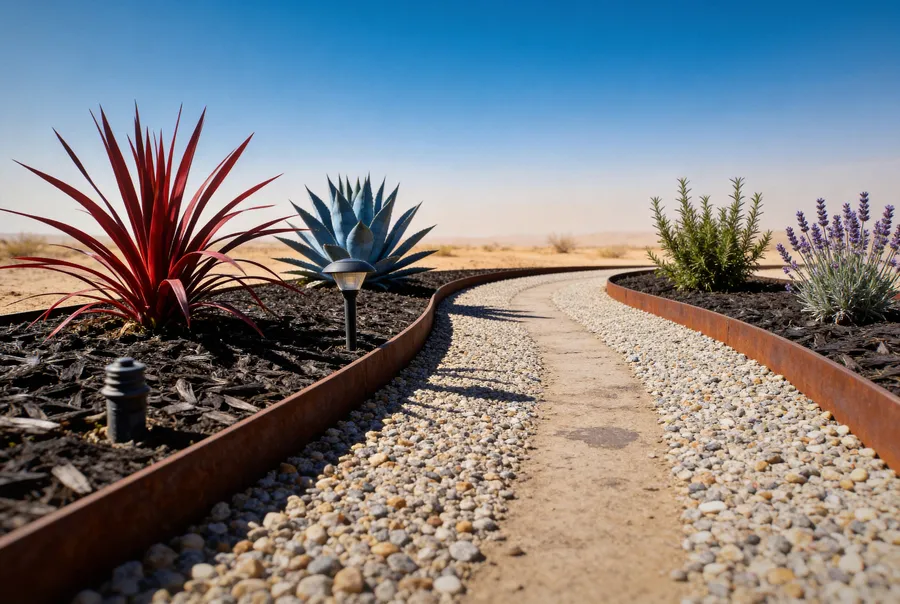
Steel or poly edging keeps mulch from migrating into gravel or pathways. It's the difference between "landscaped" and "messy."
Thinner than 2 inches and weeds push through. Thicker than 3 inches and you can suffocate plant crowns. Use a landscape rake.
Leave a 2-3 inch collar around tree trunks and plant stems. Mulch piled against wood rots bark. This is the #1 install mistake.
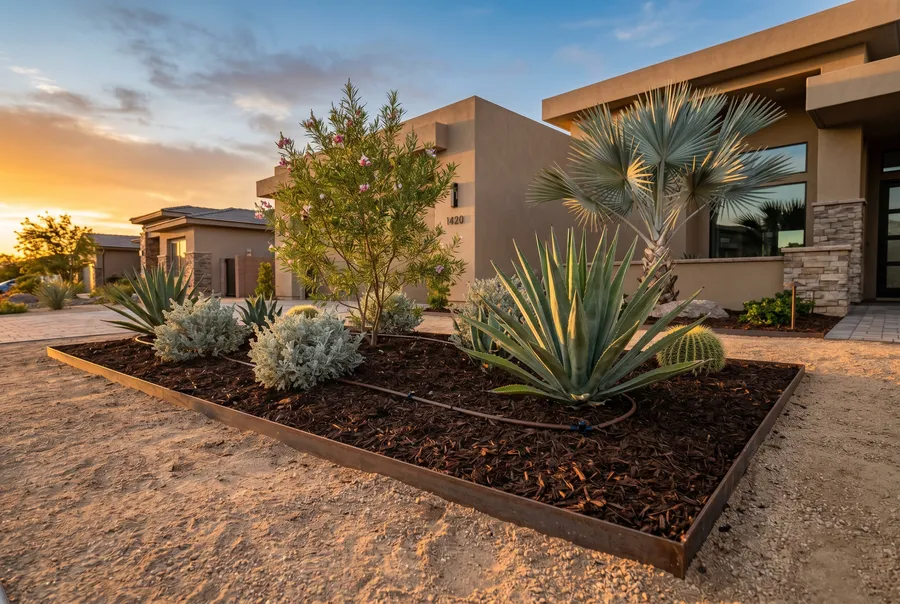
Drip lines can sit above or below. Above is easier to inspect; below keeps the surface clean. Either works.
Add 1 inch each spring to replace what decomposed. Skip years are fine if the layer is still 2+ inches deep. Test with a ruler.
SNWA's cash-for-grass program pays up to $5 per square foot for qualified turf conversions (up to $7/sq ft with LVVWD add-ons). Nevada law requires non-functional turf at commercial, multifamily, and HOA properties to be removed by the end of 2026. Homeowners can still convert on their own timeline and keep the rebate.
Rebate-eligible ground covers: DG, pea gravel, and decorative rock. Organic mulch is not eligible. That said, most rebate projects mix both, with rock as the primary ground cover and mulch around trees and in planted beds. We'll help you spec the project so the rebate math works.
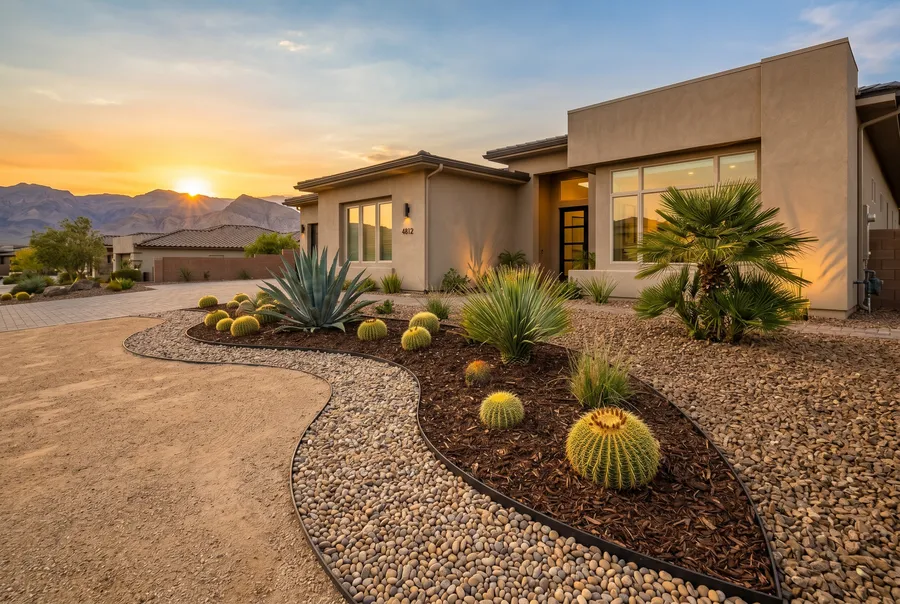
Where our ground cover materials end up, from mulched planting beds to pea gravel pathways to mixed-material xeriscapes.
Have a ground cover install you'd like featured? Send us a photo. We credit the homeowner or landscaper.
Tell us what zones you're covering, approximate square footage, and your zip code. We'll call you with a quote that covers the right material mix, tonnage, and a delivery window.