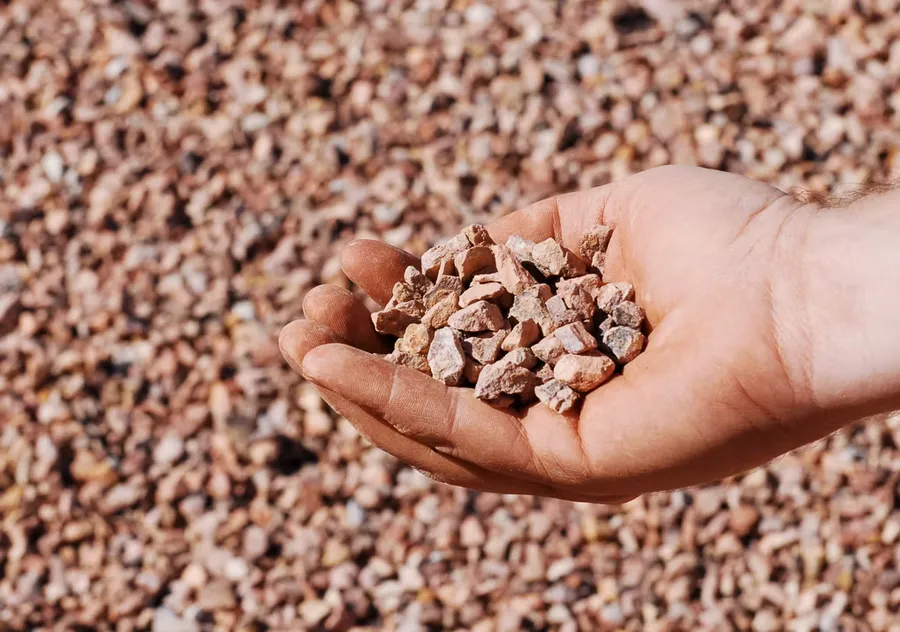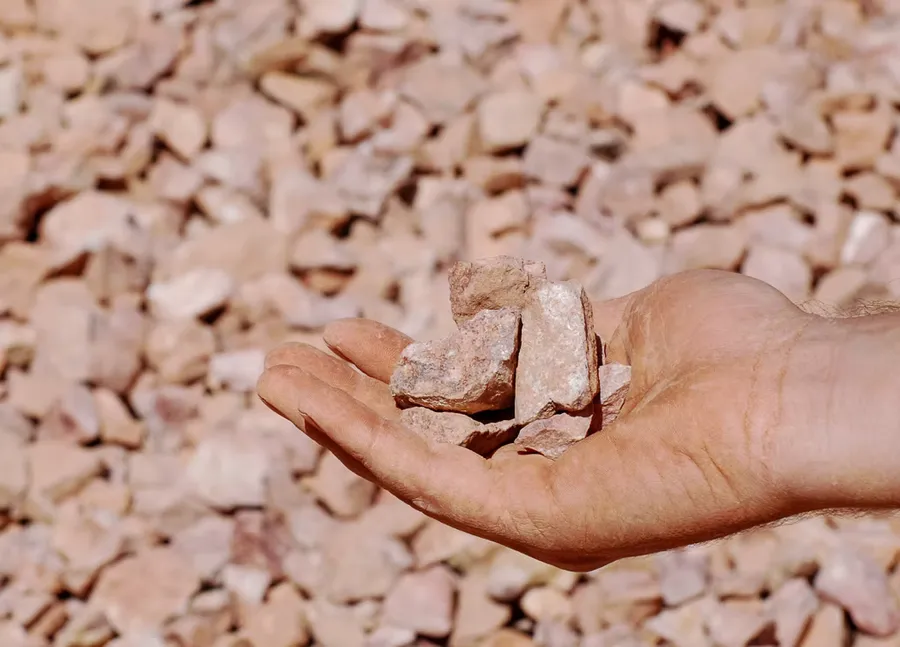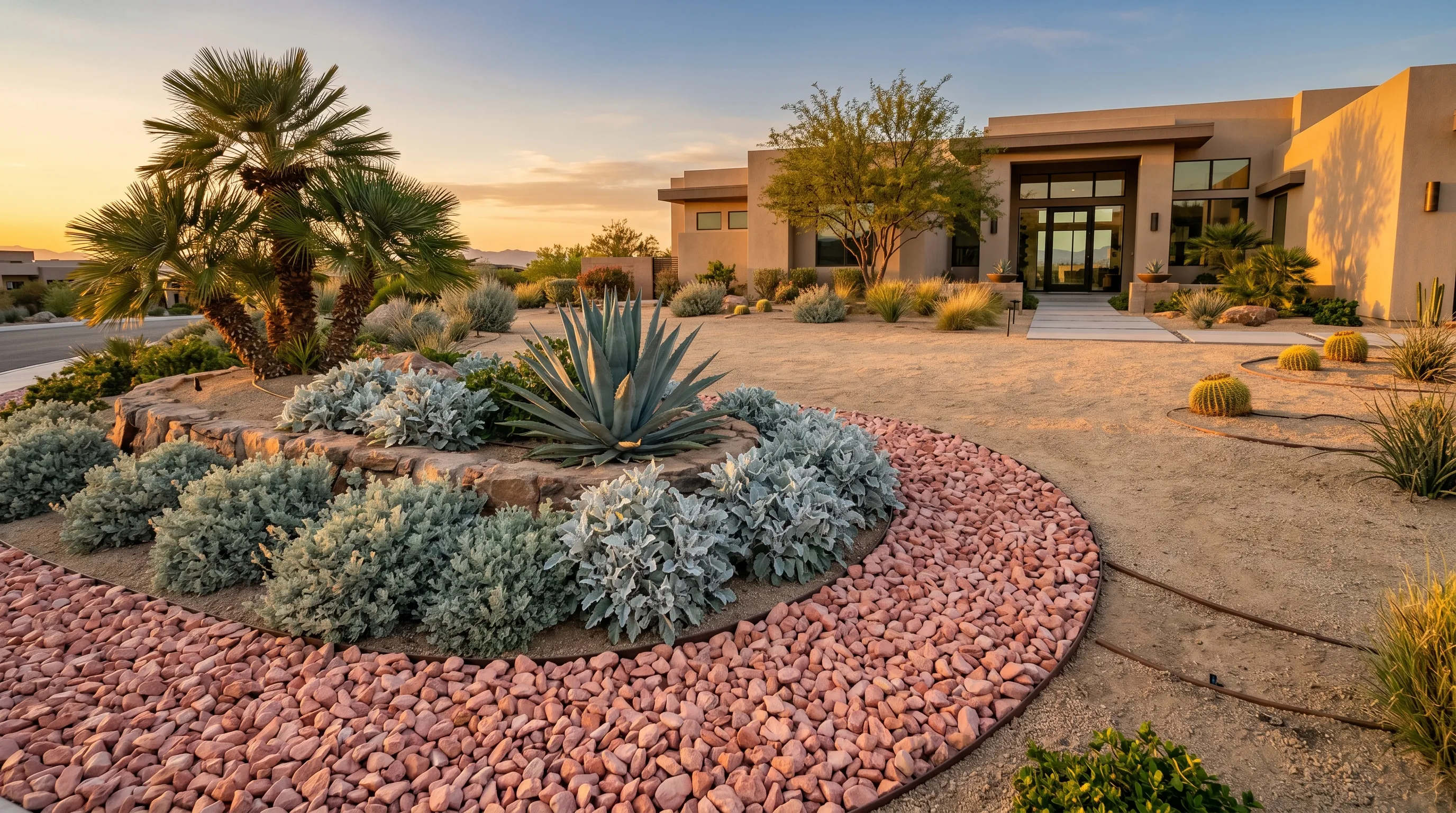
Pinkish, red, and rose hues with sun-weathered sandstone tones. This decorative rock is built for borders, flower beds, and contemporary yards. Two sizes. Delivered from the closest of our 42 sourced quarries. Rose rock works as the contrast piece that makes a neutral design come alive, not as a full-coverage ground cover. Other colors available on request.
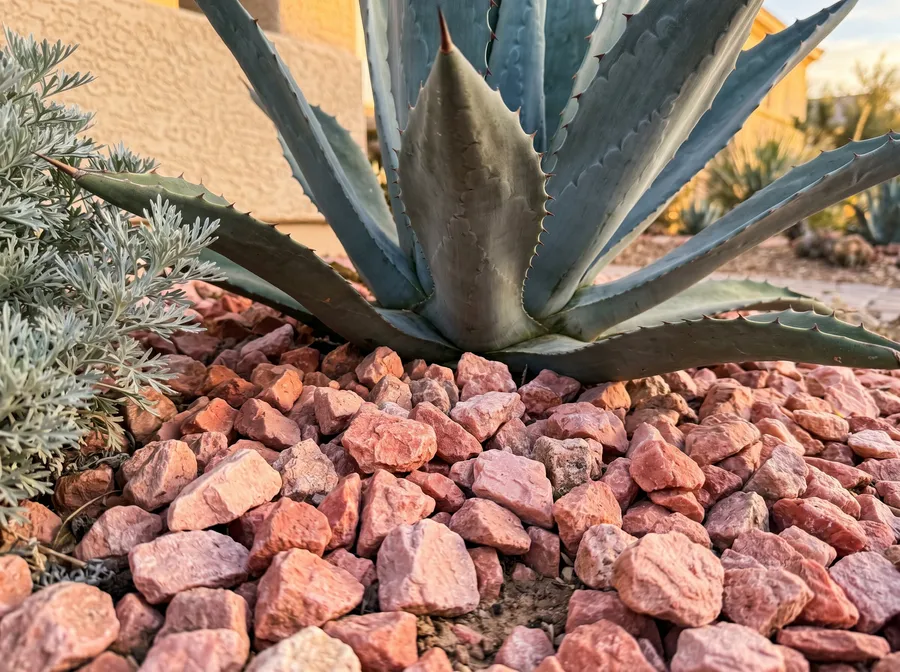
Rose rock is a decorative aggregate with pinkish, red, and rose hues alongside sun-weathered sandstone tones. It runs lighter and warmer than red rock, and it reads clearly pink against the tan and gray neutrals that dominate most Vegas yards. The look is refined rather than bold. Natural variation from soft blush to deeper coral is part of what makes it feel designer instead of dyed. Other colors available on request.
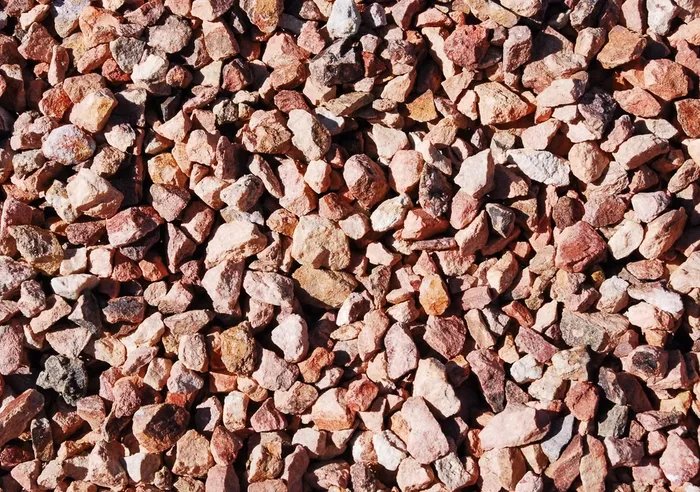
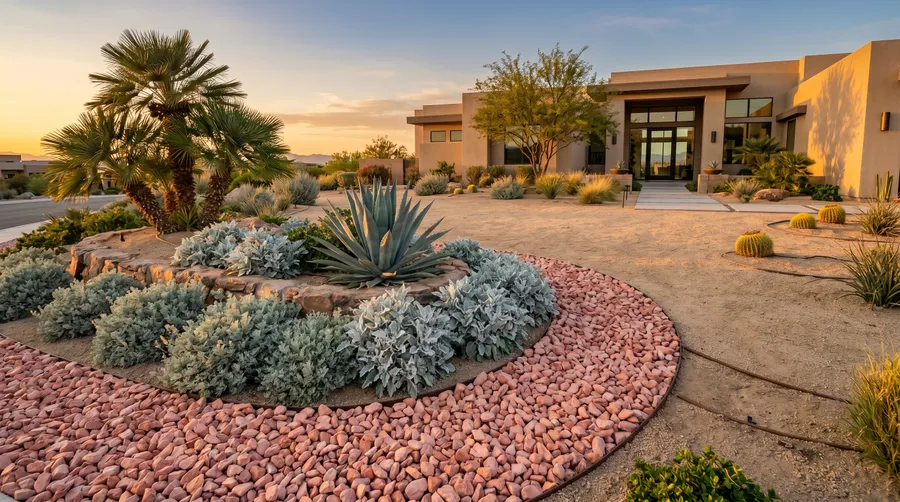
Most Vegas landscapes don't use rose rock as the main ground cover. They use it as a two-foot band around a planter bed. A contrast strip against gray hardscape. A narrow border between two larger fields of neutral rock. That's where it earns its keep. Where brown rock reads "done," rose rock reads "deliberate."
Most decorative rock in Vegas is brown, tan, or gray. Those tones read "desert neutral" and work for about 80% of yards. Rose rock exists for the other 20%, the yards where someone wants the landscape to say something.
It's the natural-tone decorative rock that reads unambiguously warm and feminine without looking dyed or artificial. That makes it valuable in a few specific design contexts.
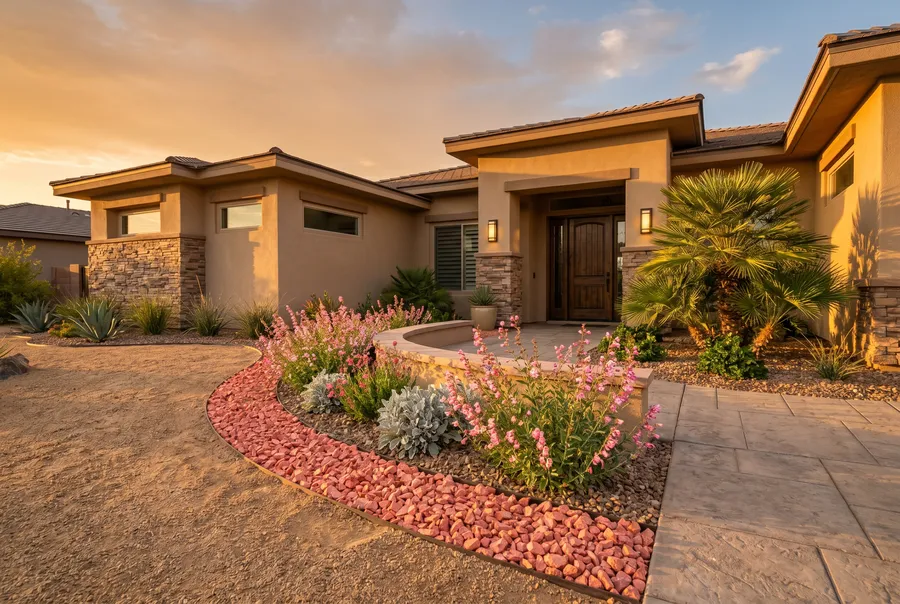
Pink on pale stucco reads warm and refined without clashing. It's the contrast color most builders reach for on contemporary desert-modern facades.
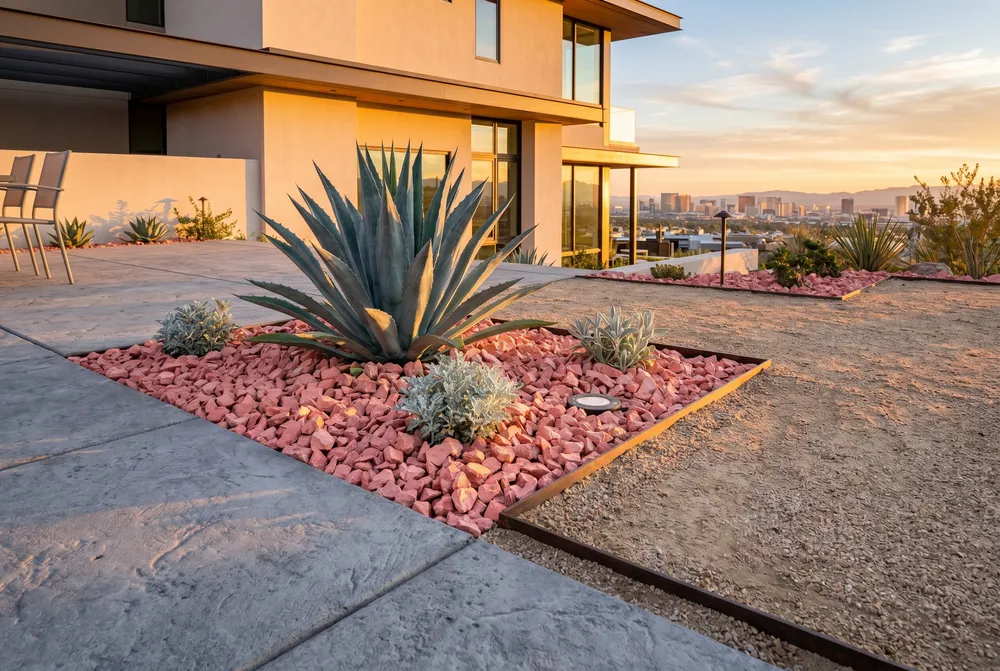
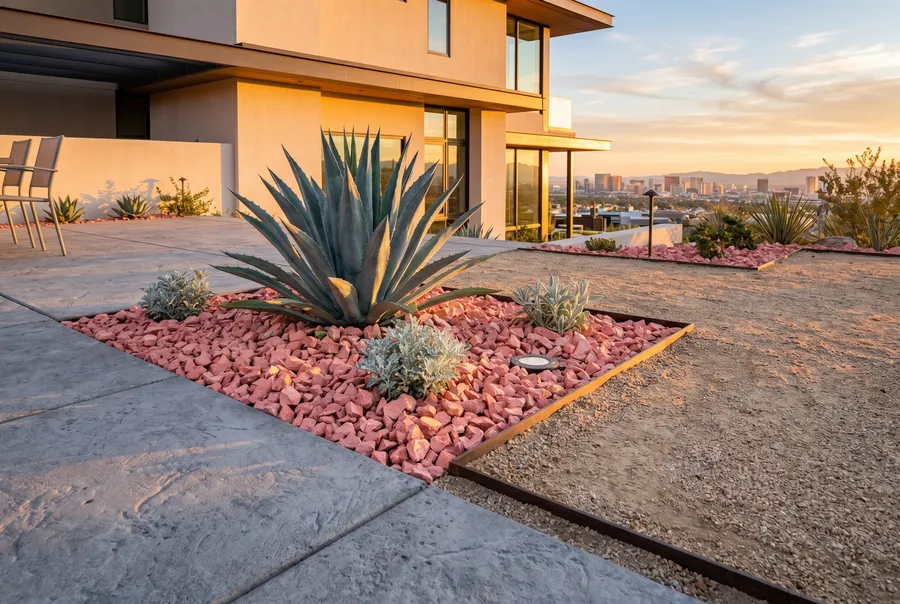
Use it where you want the eye to land. Around a single architectural agave, framing a front door walk, or encircling a sculptural yucca.
Dusty miller, silver artemisia, silver sage. The pink-silver pairing is a Vegas designer classic. Rose rock makes a silver garden look deliberate instead of accidental.
A pink band in a larger neutral field signals design investment without spending on custom hardscape. Favored by HOA beautification committees for entry monument plantings.
Both sizes carry the same pink-coral color range. The size decision comes down to where the rock sits and how close it reads.
Finer grain, softer read
Better for smaller accent bands and top-up refresh years. Reads softer from across the yard. Other colors available on request.
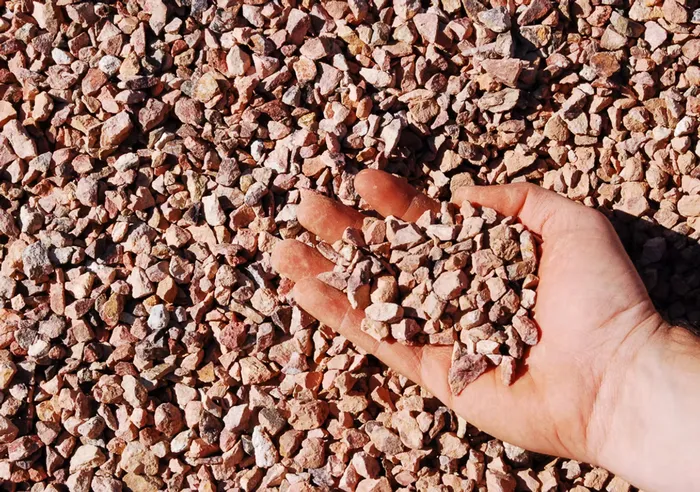
Medium grain, stronger saturation
The more versatile pick. Holds shape better under light foot traffic and reads cleaner next to hardscape.
Pro tip: 1/2" in planter beds where rock sits close to plants; 3/4" for borders and paths where it takes light foot traffic. The 3/4" holds shape better under walking.
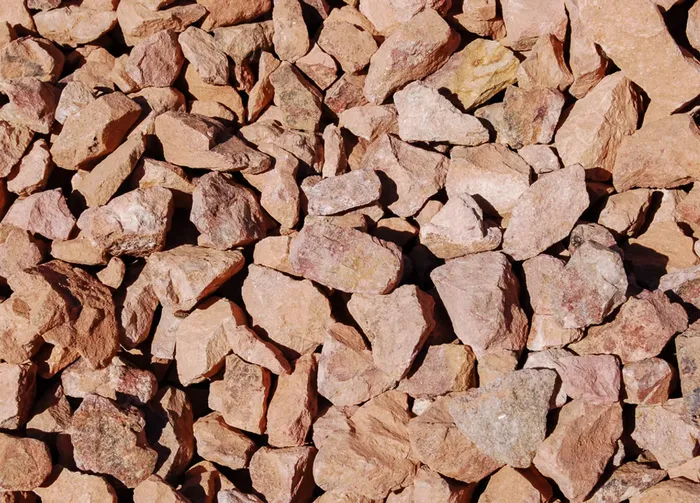
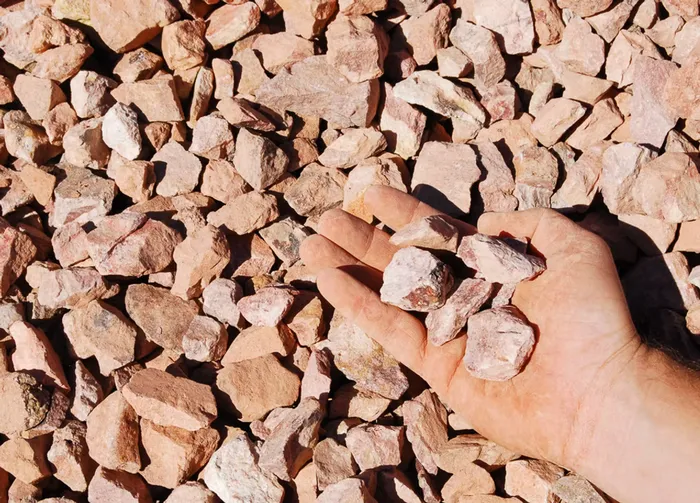
Rose rock varies naturally from blush to deep coral. Here's what current inventory actually looks like.
Matching an existing install? Pull a small sample before ordering a full load. For color consistency on new projects, take the full tonnage in one delivery.
Dusty miller, silver artemisia, silver sage. The pink-silver combo is the canonical Vegas designer pairing.
Blue agave + rose rock is the most-photographed combination in upscale desert design. Works every time.
Pavers, poured concrete, gabion walls. Pink-against-gray is the contemporary default for designer yards.
Rose reads softer and warmer than red against white. Adds warmth without clashing with the wall plane.
Use rose rock as a 1-2 ft accent band against a larger field of brown rock. Classic, works on any budget.
For a fully contemporary palette: Silver Frost as the main field, rose rock as the single warm accent.
The most-used rose rock move in contemporary Vegas design is a narrow pink-coral accent band sandwiched between gray hardscape and a neutral ground cover. The color progression reads gray, then pink, then tan. The eye moves through it without fighting it.
Steel edging is what sells the look. Without crisp edges, the band blurs and the contrast reads sloppy instead of designed. Spec 3/8" or 1/4" steel, powder-coated black or left raw to weather, and keep the band width consistent.
Rose owns pink/coral accents. The other three cover everything else.
| Color | Tone | Best For | Explore |
|---|---|---|---|
| Rose Rock | Pinkish, red, and rose hues with sandstone tones | Accent borders, silver-plant contrast, upscale & contemporary palettes | This page |
| Red Rock | Warm brick / rust | Full-field xeriscape, bold warmth, dramatic front yards | Red Rock โ |
| Silver Frost | Gray / cool silver | Modern minimalist, paired with concrete and metal | Silver Frost โ |
| Brown Rock | Neutral brown / tan | Classic desert neutral, driveways, full-coverage field | Brown Rock โ |
Rose rock qualifies for SNWA turf-replacement rebates when it's part of a grass-to-rock conversion. That's up to $5/sq ft from SNWA, and up to $7/sq ft with LVVWD add-ons. Because rose rock is typically an accent, most rose rock orders ride inside a larger rebate project where brown rock, DG, or pea gravel is the bulk ground cover and rose rock is the designer contrast piece.
If you're planning a full SNWA conversion, talk to us about budgeting rose rock as accent inside the larger material plan. We can help you spec it so the rebate math works out.
From upscale entry courtyards to contemporary patio accents, here's where rose rock actually lands in Vegas design.
Have a rose rock install you'd like featured? Send us a photo. We credit the homeowner or landscaper.
Tell us the square footage and where you're using it, whether that's an accent border, planter surround, or entry feature. We'll help you pick the right size and calculate tonnage, then call you with a quote.