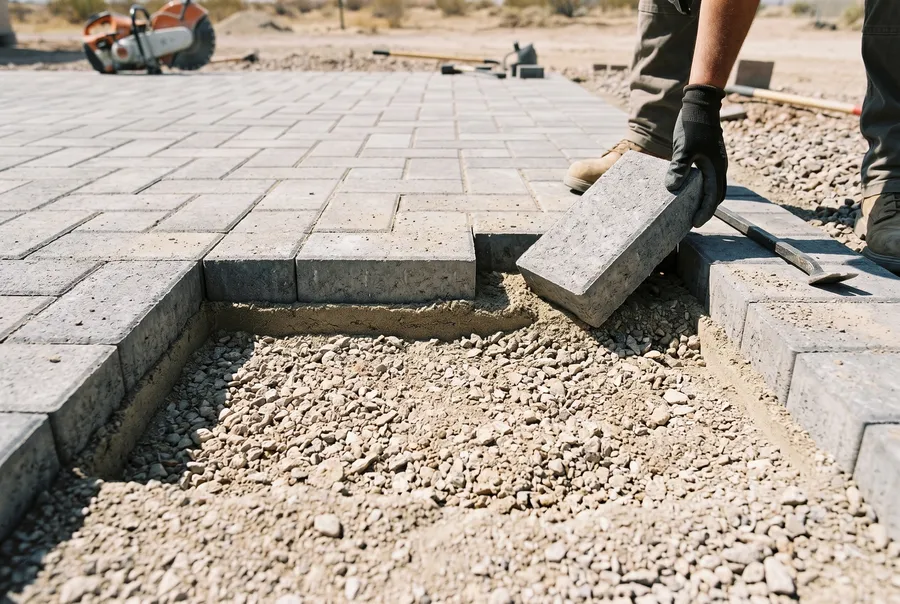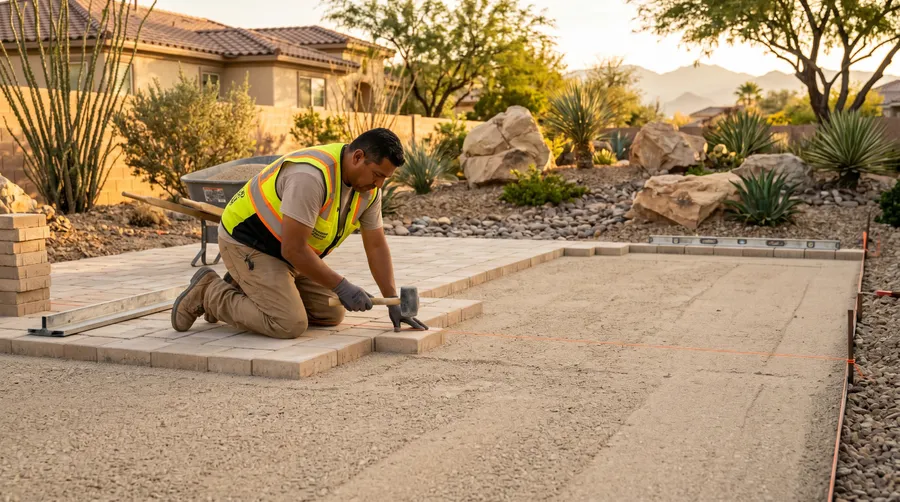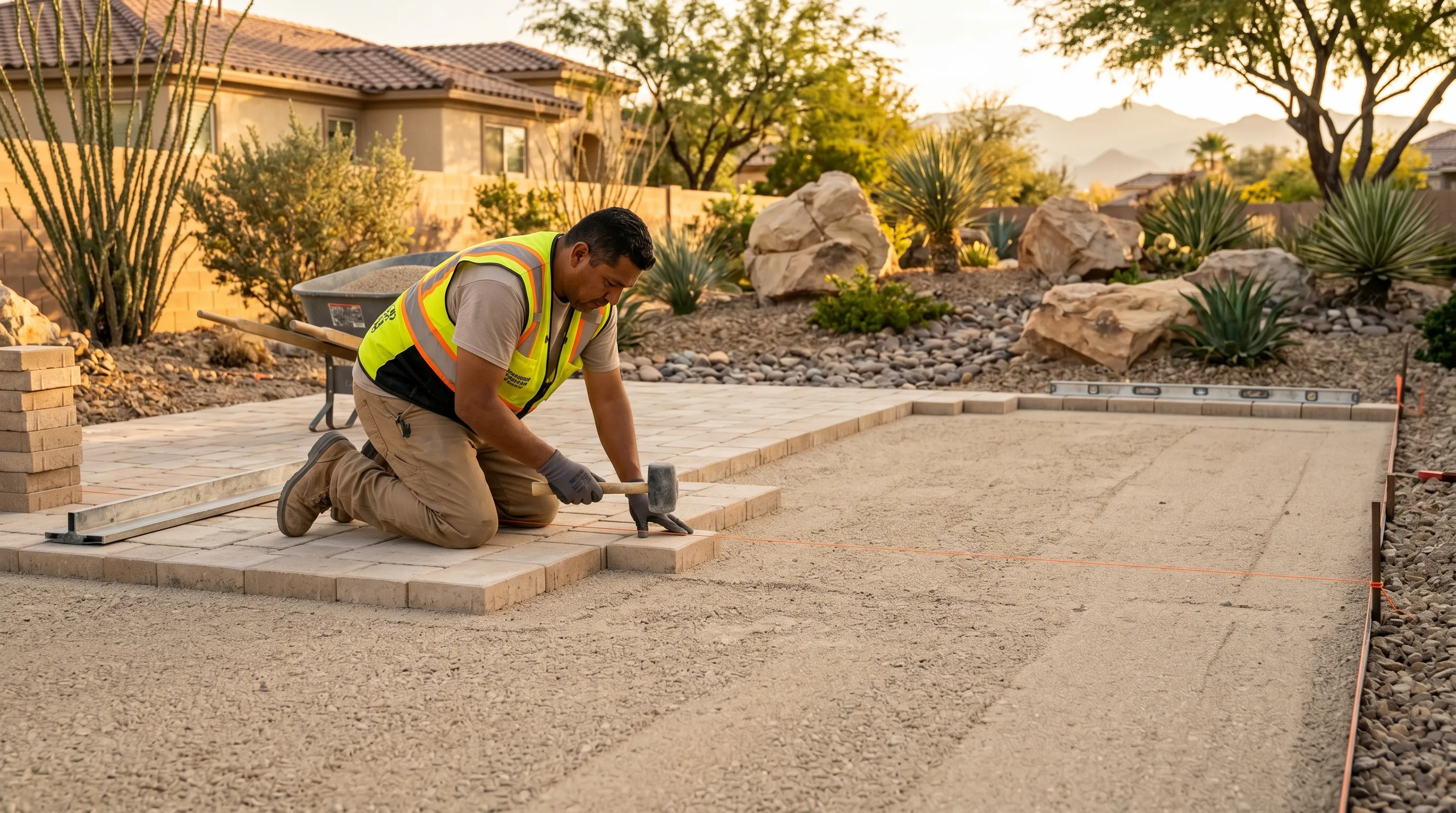
paver patio installation in progress with screeded paver base and first paver courses being set las vegas xeriscape backyard

The Difference Between a Patio That Lasts 20 Years and One That Heaves in 3

A paver patio is a four-layer system. The layer nobody sees is the one that decides how long it lasts. Paver base aggregate and bedding sand, delivered from the closest of our 42 sourced quarries for residential and commercial hardscape work across the Valley.
Pavers Don't Fail. The Base Does.

When a paver patio heaves or sinks a few years in, almost nobody blames the pavers. The pavers are fine. What failed is something underneath. Usually the sub-base got rushed on compaction, or the paver base was too thin, or somebody substituted stone dust for real bedding sand and everything above it paid for it.

Fixing that does not take more expensive material. It takes the right material at the right depth, compacted correctly. This page walks through getting that stack right, whether you are a contractor doing it twice a month or a homeowner doing it once.

Every Paver Patio, Reduced to Its Actual Parts

Miss a layer or substitute the wrong material at any level and the whole stack moves. Here is what each layer does.

1

Sub-Base

Material
Compacted native soil or pit run
Depth
4 to 6 inches

Carries the patio load down to stable ground. This is where shortcuts show up in 2 years as uneven pavers.

2

Base Layer

Material
Paver base aggregate (3/4" minus crushed)
Depth
4 to 6 inches, compacted in 2" lifts

Drains water, distributes load, and gives the bedding sand a solid surface to screed against. This is the layer most DIY patios cheap out on.

3

Bedding Sand

Material
Concrete sand or fine washed bedding sand
Depth
1 inch, uniform

The leveling layer the pavers rest on. Screeded flat, never compacted before the pavers go down.

4

Pavers

Material
Concrete or natural stone pavers
Depth
Per manufacturer

The finish surface. Set tight, tapped level, joints filled with polymeric sand or fine dry sand.

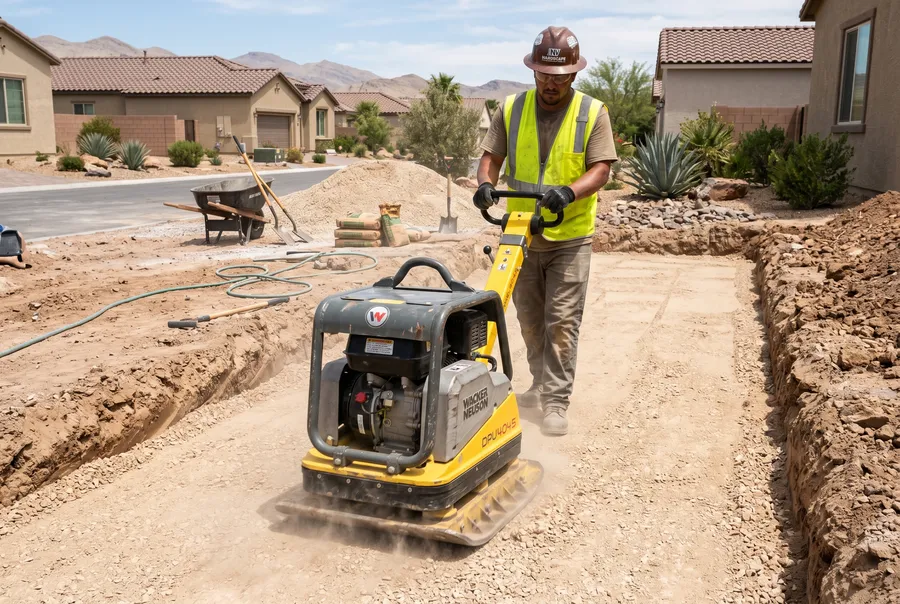
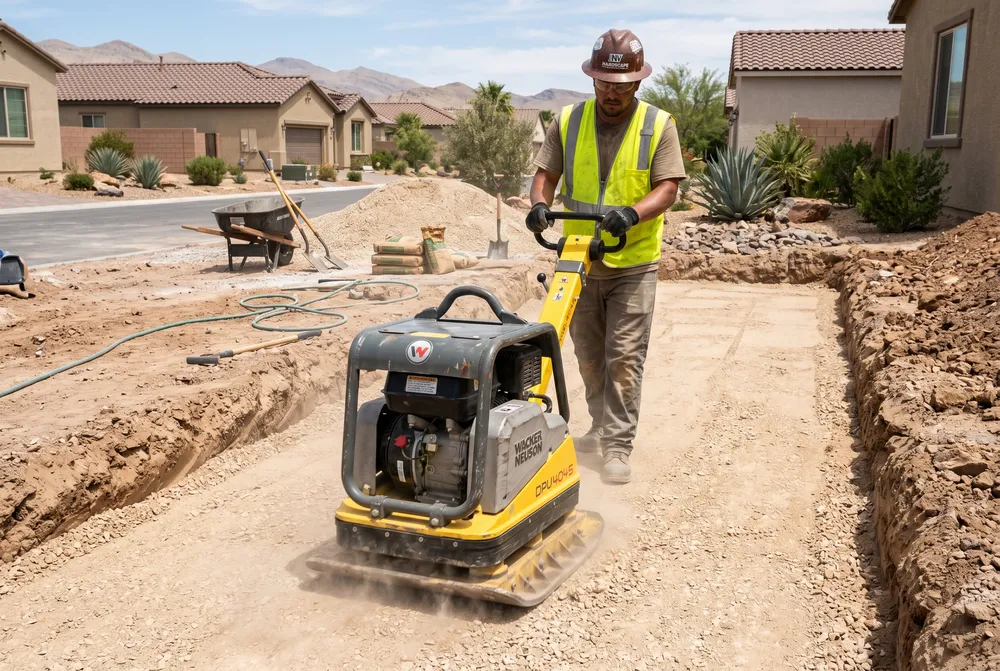
plate compactor running on paver base aggregate residential hardscape install las vegas

The Plate Compactor Is Not Optional

Paver base has to hit density before you put bedding sand on top of it. Skip the compactor and you leave voids under the base. Water gets in, seasonal temperature changes push the voids open, and a year later you are looking at uneven pavers.

Compact in 2-inch lifts. Run the plate compactor in overlapping passes until the surface stops flexing. If the material is bone dry, mist it lightly between passes; moisture helps the fines lock into the coarse stone.

The Seven Steps Contractors Do in This Order Every Time

Skip a step or run them out of order and the install fails in slow motion. This is the sequence that works.

1

Excavate to Depth

Dig down far enough to fit all four layers plus the paver thickness. For a standard residential patio: 7 to 9 inches total. Remove all organics.

2

Set the Slope

1/4 inch of fall per foot of run, away from any structure. Build the slope into the compacted sub-base. Do not try to fix slope at the paver layer.

3

Place & Compact Sub-Base

Spread 4 to 6 inches of pit run or compacted native. Run a plate compactor in 2-inch lifts until the surface stops flexing under the plate.

4

Place & Compact Base Layer

4 to 6 inches of paver base aggregate, compacted in 2-inch lifts. A vibratory plate compactor is the minimum. Add water in passes if the material is dry.

5

Set Screed Rails & Bedding Sand

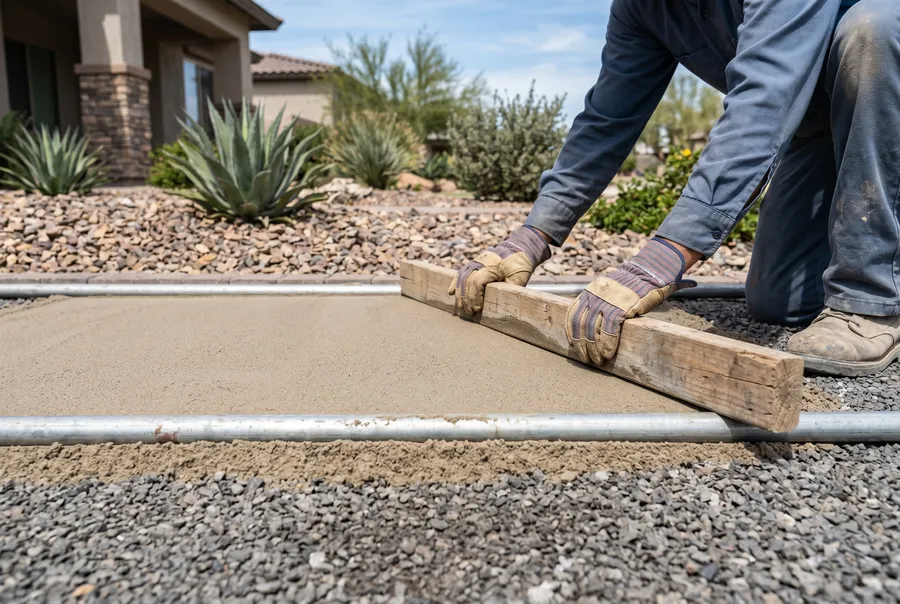
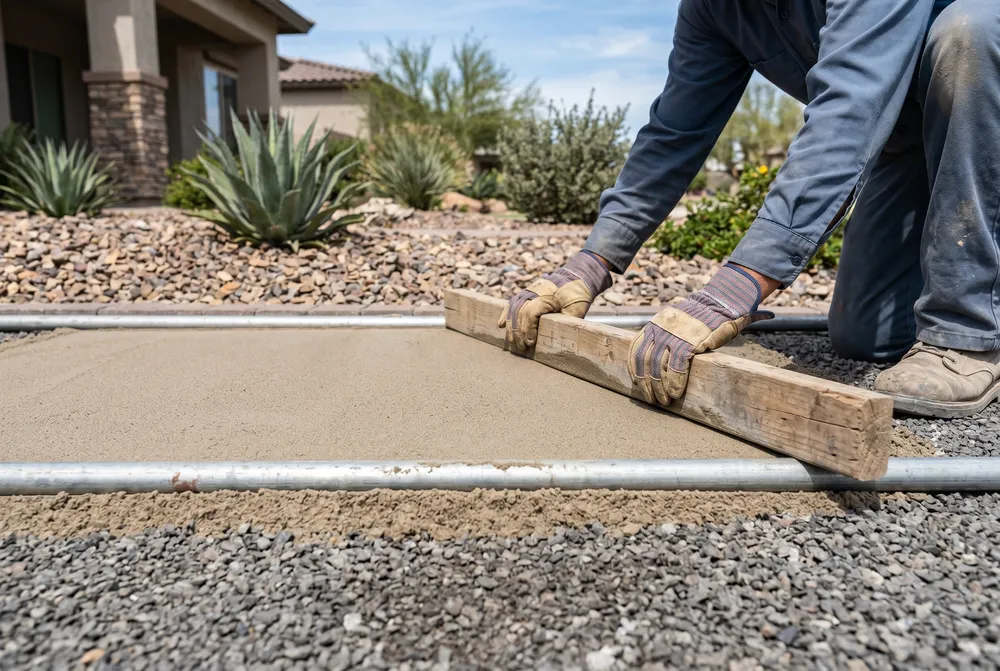
Lay two conduit or pipe screed rails on the compacted base. Spread 1 inch of clean bedding sand. Pull a straight 2x4 across the rails to screed the sand flat. Remove rails, fill the voids.

6

Set Pavers

Lay pavers tight to each other, starting from a square corner. Tap each paver with a rubber mallet to seat it. Do not drop pavers from height; it disturbs the sand.

7

Edge Restraint & Joint Fill

Install rigid edge restraint along the perimeter. Sweep polymeric or fine joint sand into the gaps. Run the plate compactor over the pavers (with a rubber pad). Mist to activate polymeric sand.

Screed It Flat, Then Leave It Alone

The bedding sand is the only layer in the stack that does not get compacted before the finish material goes down. It is the leveling layer, and the pavers need to settle into it as they are set.

Two conduit or pipe rails, 1 inch thick, set parallel and shimmed to the slope. Clean bedding sand dumped between them. A straight 2x4 pulled across the rails to screed the surface truly flat. Remove the rails, fill the voids with sand, smooth with a trowel. Do not walk on it before the pavers go down.

contractor screeding bedding sand flat over compacted paver base with straight 2x4 and conduit rails las vegas

Get the Water Off the Patio or the Water Will Ruin It

Efflorescence, ice heave, paver movement. Almost always a drainage problem before it becomes a material problem.

FactorSpecWhy
Slope 1/4" per foot of run, away from structure Water has to leave the patio. Set the slope in the compacted base, not by tilting pavers.
Base material 3/4" minus crushed paver base aggregate Drains water, compacts to 95 percent, bridges imperfections in the sub-base.
Bedding sand Concrete sand (ASTM C33) or equivalent fine washed bedding sand Uniform gradation lets water pass; too-fine sand packs and holds water.
Do not substitute Stone dust or crushed fines as bedding Packs too tight, holds water under the pavers, causes efflorescence and ice heave.
Low-spot site Add a french drain under the base before building up If the patio sits in a drainage catchment, water will find it. Solve it once, upstream.

How Much Do You Actually Need?

Rough tonnage at standard depths. Add 10 percent to the base numbers for compaction loss. Call us for tighter quantities.

Project SizePaver BaseBedding SandNotes
100 sq ft patio ~1.7 tons paver base ~0.4 tons bedding sand 4" base + 1" bedding; +10% for compaction loss
300 sq ft patio ~5.2 tons paver base ~1.3 tons bedding sand Standard residential backyard patio
500 sq ft patio ~8.6 tons paver base ~2.1 tons bedding sand Large backyard or small commercial
1,000 sq ft ~17.3 tons paver base ~4.2 tons bedding sand Big residential install or retail entry
Driveway (100 sq ft at 6" base) ~2.6 tons paver base ~0.4 tons bedding sand Deeper base for driveway loads

Pro tip: Order 10 percent extra on both layers. The base loses volume to compaction, and the bedding sand always seems to disappear into screed voids faster than you expect. Running short mid-install and waiting on a second delivery is the fastest way to ruin a patio schedule.

Where Paver Base Actually Goes

Residential Patios & Walkways

The flagship hardscape application. 200 to 1,000 square feet of paver surface over a properly graded base. We deliver paver base and bedding sand to homeowners doing it themselves and to hardscape contractors who do it every week.

Driveways & Parking Aprons

Paver driveways need more base than patios. Plan for 6 to 8 inches of compacted paver base plus 1 inch bedding sand under driveway-rated pavers. The load is bigger, so the base has to be deeper and denser.

Pool Decks & Surrounds

Pool decks live with constant water, so drainage is non-negotiable. Standard paver base with clean bedding sand lets water move through the stack. Avoid stone dust around pools; it holds moisture and stains.

Commercial Hardscape

Retail plazas, courtyards, and commercial walkways. The base stack is the same, scaled up, with engineered drainage and edge restraint. We supply loads to the phasing so the crew screeds and sets on the same day the base is compacted.

SNWA Turf Conversion

Paver patios and walkways replacing lawn qualify for SNWA rebates. Combined with a proper base, the conversion saves water and adds usable outdoor space that lasts decades. Pre-approval required before work starts.

Retaining Wall Caps & Steps

Level courses under wall caps and stair treads. Smaller tonnage, same compaction discipline. Loose base under a step cracks the cap the first time someone walks on it wrong.

Paver Base in Place, From Compactor to Finish

What each phase actually looks like on a real residential install.

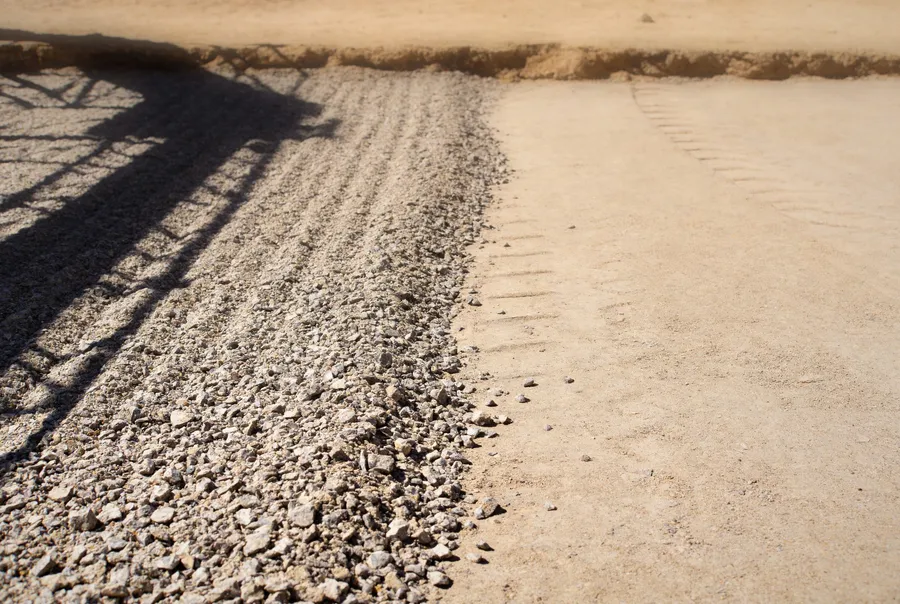
paver base aggregate 3/4 inch minus crushed stone closeup las vegas
Paver base closeup · 3/4" minus crushed aggregate
plate compactor on paver base residential install las vegas
Compaction · 2-inch lifts, overlapping passes
contractor screeding bedding sand flat paver install las vegas
Screeding · bedding sand flat on compacted base
paver patio layer cut-away showing base aggregate bedding sand and paver las vegas
Layer detail · paver lifted to show the stack
paver patio install in progress with first courses being set las vegas xeriscape
Install in progress · first courses on screeded sand
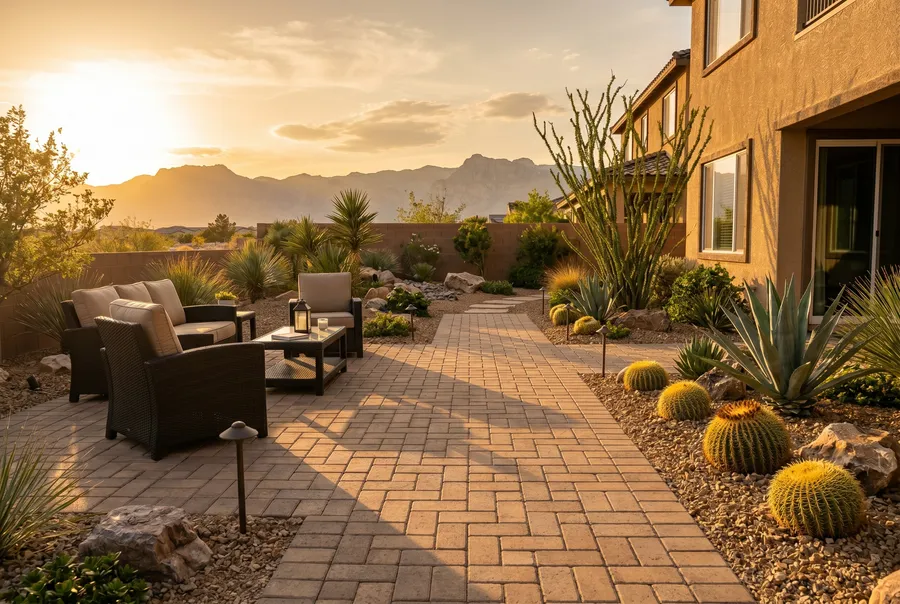
finished residential paver patio golden hour las vegas xeriscape backyard
Finished install · residential xeriscape patio

Paver Base Plus the Rest of the Project Stack

Frequently Asked Questions

Paver base is crushed 3/4 inch minus aggregate sized and graded specifically for hardscape bedding work. It drains well, compacts cleanly, and gives the bedding sand a stable surface. Type II base is a spec aggregate base for roads, slabs, and parking lots, graded to a tighter engineering specification with documented test data. Both compact, but Type II is engineered for load-bearing pavement sub-base, and paver base is sized for hardscape. For a standard residential patio, paver base is the right call. For a paver driveway or a commercial install, the plan may call for Type II underneath.
Yes. ASTM C33 concrete sand is a common and widely accepted bedding material for paver installations. Some hardscape contractors prefer a finer bedding sand or a dedicated paver bedding product for very smooth installations, but concrete sand is the standard spec in most residential and commercial work. What you want to avoid is stone dust or crushed fines; those pack too tight and will not drain.
Rough estimate: at 4 inches of compacted paver base, you need about 3.5 tons plus 10 percent for compaction loss, so call it 3.8 tons. Plus about 0.8 tons of bedding sand at 1 inch depth. For anything above a small project, use our Material Calculator or call (702) 597-1010 and we will run the full quantity against your dimensions.
1/4 inch of fall per foot of run, always sloped away from any structure. On a 10-foot-wide patio, that is a 2.5 inch drop across the width. Set that slope in the compacted base layer, not by tilting pavers. Water has to leave the patio surface or it will find a way under the pavers eventually.
Yes. Sub-base and paver base both need compaction in 2-inch lifts. Do not try to compact 4 inches of base in one pass; you will get a crust on top and loose material underneath. The bedding sand is the exception. Screed it flat and leave it alone until the pavers are down and you run the plate compactor across the paver surface.
Yes, for patios under 200 square feet with simple rectangles and good site access. The hard part is not laying pavers. The hard part is compacting the base evenly, getting the slope right in the base, and screeding the bedding sand truly flat. You need a rental plate compactor, a long straightedge, a rubber mallet, and patience. Plan for the first 20 square feet to be the learning curve.
Polymeric sand is fine joint sand with a polymer binder that activates with water. Swept into the joints between pavers, it locks the joints against ants, weeds, and washout. For anything more than a temporary patio, use it. Fine dry sand is cheaper but washes out in monsoon rain and has to be topped up annually.
With a solid base, clean bedding sand, and proper edge restraint, 30 years before any real maintenance. The pavers themselves outlast the base stack by a wide margin. What fails first on a bad install is almost always the base. Get the foundation right and the patio outlives the person who built it.
Yes. Replacing turf with hardscape (pavers, decomposed granite, rock) qualifies for SNWA turf conversion rebates. You need pre-approval from SNWA before starting the work. See SNWA Rebate Guide for the process and pair it with our paver base on the material calculator for the quantities.

Ready to Build the Patio Right the First Time?

Tell us the square footage, site access, and whether it is a patio, driveway, or pool deck. We'll call you with a quote covering tonnage, delivery windows, and the bedding sand that matches your paver manufacturer spec.